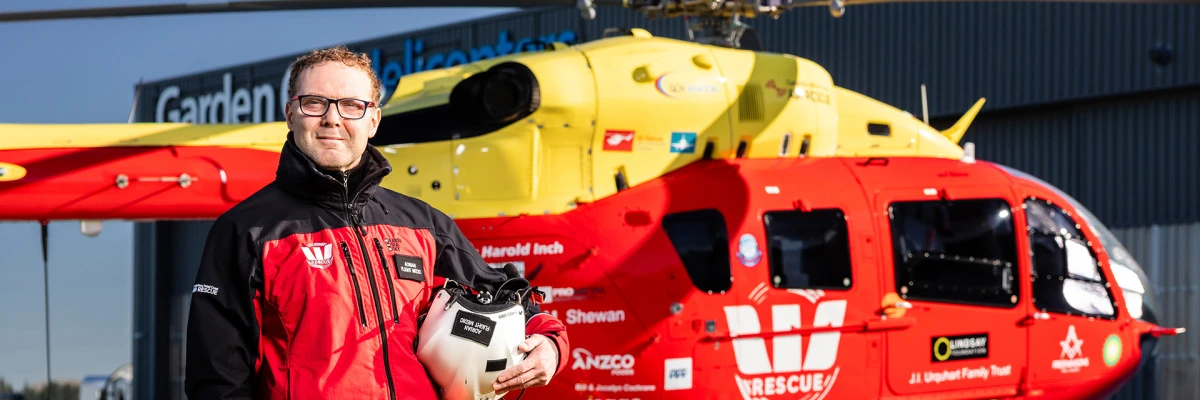
Q: What does a typical day look like on the job?
Every shift starts with a detailed handover, safety checks, and helicopter prep, but after that, there’s no such thing as a typical day. One day we’re doing hospital transfers, the next we’re trekking through dense bush or winching someone off a mountain face. Every mission is different. I remember a nine-hour job carrying a patient out of the bush near Fox Glacier on foot. An effort like that pushes you to your physical and mental limits.
Q. How do you stay prepared for such demanding situations?
Keeping physically fit is essential. We’re carrying gear, navigating rough terrain, and operating in stressful conditions, so your body must be ready. But mental fitness is just as important. I invest in quality sleep, hydration, staying connected to family, and fuelling my body the right way. Good health isn’t something you can leave to chance in this job, it’s something you have to be willing to build on every day.
Q. What role does nutrition play in supporting the demands of your work?
Nutrition is absolutely fundamental. Protein supports muscle recovery. Good quality beef and lamb from ANZCO Foods delivers that protein along with essential nutrients like zinc, and B12. These are critical for energy, focus, and alertness. When you’re working at 2am in freezing conditions, you need to know you’ve given your body the fuel that will ensure it lasts the distance. I also focus on gut health, because it’s not just what you eat, but how well your body processes it, hence the iron in beef and lamb is really important because it’s highly absorbable, which is vital when endurance and mental clarity matter most. The difference is noticeable: I’m more alert and better equipped for long, demanding shifts. This isn’t about the latest food trends, it’s about eating for performance and long-term health and wellbeing.
Q. What’s your go-to, protein-packed meal when you’re on an overnight shift with the team?
Getting together for a crew meal is a great way to connect and check in before the night ramps up. A slow cooked dish like beef cheeks or a lamb curry in the crock pot is ideal, particularly if we get called out right as we’re about to eat, which happens more than you’d think! I was a chef before I became a paramedic, so I appreciate the value of using good quality ingredients and whole foods to help the team fuel properly. Beef and lamb are a regular item on the menu, but it’s also really important to load up on plenty of fresh vegetables and fruit to create the right balance in our diet.
Q. Any advice for someone considering a future in rescue work?
Be prepared to be a lifelong learner. The job is always changing, and you’ve got to genuinely care about your work, your team, and the people you’re helping every day. You also need to find the time to care for yourself in terms of what you eat, how you recover, and how you show up for work with the energy and attitude to perform at your best. For me, nutrition and good health aren’t optional extras. They’re part of the uniform.
Q. What are your thoughts on the partnership between the Canterbury Westpac Rescue Helicopter Service and ANZCO Foods?
ANZCO’s involvement is more than just sponsorship – it’s about backing people who need to be at their best every single day through their commitment to nutrition, good health, and the supply of beef and lamb to New Zealander’s and the world. ANZCO’s support isn’t just financial, they contribute in practical ways, such as donating beef and lamb for community events, running Angel Bay burger shouts for the crew, and backing initiatives like our golf fundraiser. Their involvement helps keep the service running, the team fuelled, and morale high, and it’s great to have them on board.