
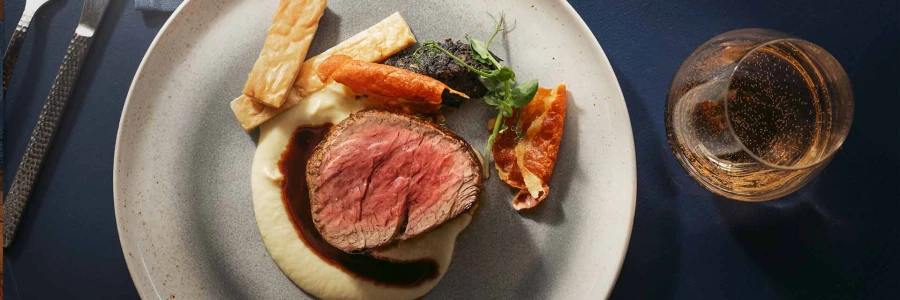
Deconstructed Beef Wellington
Posted on Tuesday, 14 July 2026 under Beef,
A modern take on the classic Beef Wellington. This deconstructed Beef Wellington recipe delivers all the rich flavours of the traditional favourite in a beautifully refined presentation. Featuring premium ANZCO New Zealand eye fillet, silky onion purée, rich mushroom duxelles, crisp prosciutto, flaky puff pastry and a glossy red wine jus, it's an elegant dish that's perfect for entertaining or special occasions. Easier to prepare than a traditional Beef Wellington, this recipe lets the quality and flavour of New Zealand beef take centre stage.
Ingredients
TENDERLOIN
1.2kg Beef Tenderloin
30ml neutral oil
40g butter
2 garlic cloves, peeled
4 fresh thyme sprigs
1 fresh rosemary sprig
ONION PURÉE
60g butter
4 large brown or yellow onions, peeled and
thinly sliced
100ml full fat milk or cream
MUSHROOM DUXELLES
40g butter
1 large (60g) shallot, very finely diced
2 garlic cloves, crushed
1 tsp fresh thyme leaves
400g button or portobello mushrooms, roughly
chopped into 3-5mm dice
40ml Madeira, Marsala or dry sherry
RED WINE JUS
45g butter, cold and diced, divided
1 shallot, finely sliced
1 garlic clove, crushed
2 fresh thyme sprigs
200ml red wine
500ml good quality beef stock
PASTRY SHARDS
150g all-butter puff pastry sheet, thawed
CRISPED PROSCIUTTO
6 slices prosciutto
TO FINISH
Micro herbs, to garnish
Serves: 6 | Prep: 45 minutes | Cook: 1 hour 15 minutes
METHOD
-
ONION PURÉE
Melt butter in a large, heavy-based pan over low heat. Add onions and a good pinch of salt. Cover
with a lid and sweat very gently for 35–40 minutes, stirring occasionally, until completely soft and
translucent (do not allow onions to brown).
Add the milk or cream and warm through. Transfer to a blender and blitz until completely smooth
and silky. Pass through a fine sieve. Season with salt and white pepper.
Refrigerate until service. Can be made up to 2 days ahead. Reheat gently before service. -
MUSHROOM DUXELLES
Melt butter in a large heavy-based pan over medium heat. Add the shallot and cook until soft,
approximately 5 minutes. Stir in garlic and thyme and cook for a further minute.
Add the mushrooms. Cook, stirring frequently, until the moisture has evaporated and the mushrooms
are thick and jammy, approximately 15–20 minutes.
Add the fortified wine and cook until completely absorbed. Season generously with salt and black
pepper. The duxelles should be dark and intensely flavoured, with just enough moisture to be glossy
and cohesive.
Can be made up to 3 days ahead and refrigerated. -
RED WINE JUS
Melt 15g butter in a heavy saucepan over medium heat. Add the shallot and garlic and sweat until
completely softened, approximately 5 minutes. Stir in the thyme and red wine and reduce by half.
Add the beef stock and reduce by two thirds until the jus is glossy, 20–25 minutes. Strain through a
fine sieve.
Just before service, bring back to a simmer and whisk in the remaining 30g cold diced butter. Season
with salt.
Can be made up to 3 days ahead and refrigerated. -
PASTRY SHARDS
Preheat oven to 200°C fan-forced. Cut the pastry into elongated triangles or rectangles (one per
portion plus a few extra).
Place on a baking tray lined with baking paper. Place a second sheet of baking paper on top and
weigh down with another baking tray - this keeps the pastry flat and even as it bakes.
Bake for 12-15 minutes, until golden and crisp. Cool completely on a wire rack.
Can be baked ahead. Store in an airtight container at room temperature for up to 12 hours, or freeze.
Reheat from frozen at 200°C for 3-4 minutes. -
CRISPED PROSCIUTTO
Preheat oven to 180°C fan-forced. Lay the prosciutto slices flat on a wire rack set over a baking tray.
Bake for 8–10 minutes until completely crisp. Cool on the rack.
Handle carefully - the crisped prosciutto is very fragile.
Can be made up to 3 hours ahead and kept at room temperature (do not refrigerate). -
TENDERLOIN
Remove tenderloin from the fridge 45–60 minutes before cooking. Preheat oven to 180ºC. Tie
tenderloin with butcher's twine at 3cm intervals to maintain an even cylindrical shape. Season generously on all sides with salt and cracked black pepper.
Heat a heavy cast iron pan over high heat until smoking. Add the oil then sear tenderloin on all sides, including the ends, until a deep, golden crust forms, approximately 2–3 minutes per side. Reduce heat to medium and add the butter, garlic, thyme and rosemary. Baste continuously for 1 minute.
Transfer to oven and roast for 15–20 minutes, for rare. Remove from the oven when the internal temperature reaches 50°C.
Rest on a wire rack for a minimum of 10 minutes before slicing. Tent loosely with foil if needed - the fillet will hold for up to 1 hour. Flash in a hot pan for 30 seconds per side before slicing, to revive the crust. -
PLATING
Remove the butcher's twine from the tenderloin. Using a sharp carving knife, slice the rested eye fillet
into rounds approximately 4cm thick.
Spoon a smooth disc of onion purée onto a warm plate. Place a spoonful of mushroom duxelles neatly alongside.
Arrange a slice of beef centrally on the plate, cut-side up to show the rare interior. Add the pastry shard and crisped prosciutto.
Finish with a drizzle of jus and garnish with micro herbs. Serve immediately. -
CHEF'S NOTES
THE PERFECT RARE Pull the fillet from the oven at 50°C internal - it will rise to 52–53°C during resting.
Do not rely on timing alone as every fillet is different. A meat thermometer is the most reliable way to
achieve a consistent rare result.
Tips for the perfect Deconstructed Beef Wellington
- Bring the beef to room temperature for 45–60 minutes before cooking to ensure even cooking throughout.
- Use a meat thermometer rather than relying on cooking time. It's the easiest way to achieve perfectly cooked eye fillet.
- Rest the beef before slicing to allow the juices to redistribute and keep every slice tender and juicy.
- Cook the mushroom duxelles until thick and jammy. Removing excess moisture creates a richer flavour and better texture.
- Prepare components ahead of time. The onion purée, mushroom duxelles and jus can all be made in advance, making entertaining much less stressful.
- Serve on warm plates so the beef and sauce stay at the perfect temperature.
- Don't overcook the eye fillet. This premium cut is best enjoyed rare to medium-rare for maximum tenderness.
Frequently Asked Questions
What is a deconstructed Beef Wellington?
A deconstructed Beef Wellington includes all the classic flavours of a traditional Wellington; beef fillet, mushroom duxelles, pastry and rich sauce, but serves each element separately. It creates an elegant presentation while making the dish easier to prepare and ensuring every component is cooked perfectly.
What cut of beef is best for Beef Wellington?
Eye fillet (also known as beef tenderloin) is considered the best cut for Beef Wellington because it is naturally tender, lean and cooks evenly. This recipe uses premium ANZCO Foods eye fillet for exceptional flavour and tenderness.
What temperature should eye fillet be cooked to?
For rare, remove the beef from the oven when it reaches an internal temperature of 50°C. After resting, it will rise to around 52–53°C. For medium-rare, aim for 54–57°C after resting.
Can I prepare Beef Wellington in advance?
Yes. The onion purée, mushroom duxelles, red wine jus, pastry shards and crisp prosciutto can all be prepared ahead of time. Cook the beef just before serving for the best texture and flavour.
What is mushroom duxelles?
Mushroom duxelles is a finely chopped mixture of mushrooms, shallots, garlic and herbs that is slowly cooked until rich, concentrated and full of flavour. It is one of the signature elements of a classic Beef Wellington.
Why is resting beef important?
Resting allows the juices to redistribute throughout the meat, resulting in a more tender and succulent eye fillet. Slicing immediately after cooking can cause valuable juices to run out.
Can I make this recipe without alcohol?
Yes. The Madeira or Marsala in the mushroom duxelles and the red wine in the jus can be replaced with additional quality beef stock. While the flavour profile will be slightly different, the dish will still be rich and delicious.
What should I serve with deconstructed Beef Wellington?
This recipe is complete on its own, but it also pairs beautifully with roasted baby potatoes, seasonal green vegetables, asparagus, glazed carrots or a fresh green salad.
Why use New Zealand beef for Beef Wellington?
Premium New Zealand beef is naturally raised to produce exceptional tenderness, flavour and eating quality. Eye fillet is one of the most prized cuts, making it the perfect centrepiece for a special occasion.
Can I cook this recipe for Christmas or dinner parties?
Absolutely. Deconstructed Beef Wellington is ideal for Christmas lunch, holiday entertaining, date nights or dinner parties because many of the components can be prepared in advance, allowing you to finish the dish just before serving.


