
Fuelling a champion’s legacy
Posted on Monday, 19 January 2026
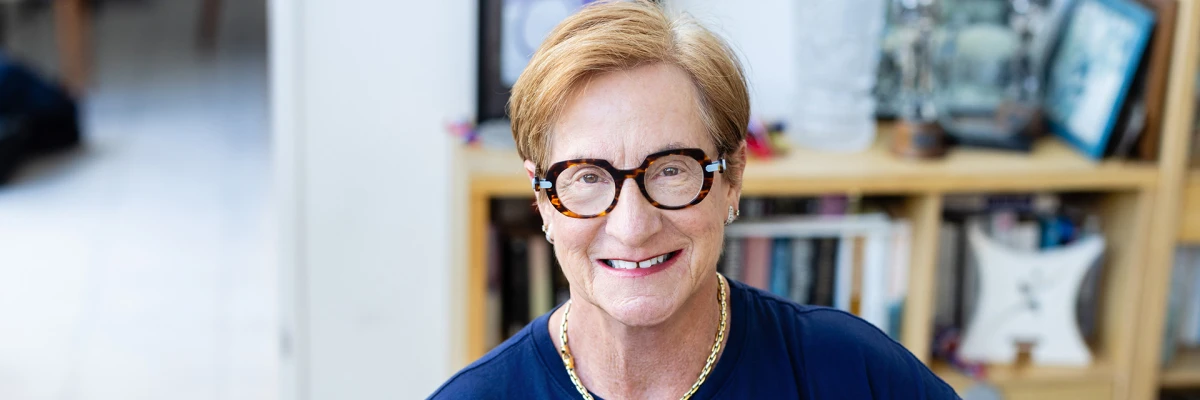
Having retired from triathlon in 1994 with an amazing record of 104 wins out of 121 professional races, including nine world titles to her name, it would be hard not to claim Erin Baker as New Zealand’s greatest ever triathlete and IRONMAN (although no doubt she would argue against that given her understated and humble nature). We sat down with Erin to discuss her time in the sport and how it has evolved over the years, as well as her love for New Zealand beef and lamb.
Please click the Fullscreen option in the bottom right-hand corner to view the article larger. (Press Escape to exit full screen).
Q. Erin, your achievements in the sport of triathlon are well documented. Looking back, what moments stand out most in your career?
Funnily enough, one of the victories I remember the most was not actually a triathlon, but instead winning a running race in America called ‘The Bix 7’ in 1989. I set the course record that day and beat a lot of incredible athletes, including Anne Audain, who was one of New Zealand’s great middle and long distance runners of the day. I have fond memories of that achievement because I always loved running, and it was my favourite discipline in triathlon. When I look back at who inspired me as a young athlete, it was that era of amazing female New Zealand runners like Anne Audain, Allison Roe and Lorraine Moller. Seeing those Kiwi women perform at the highest level was a real motivation for me. When it comes to IRONMAN, winning the IRONMAN World Championship in Kona, Hawaii, in 1987, and then again in 1990 with a course record, would be my greatest memories and achievements. I had sworn I’d never do Kona, thinking it was too hard, too hot, and too much pressure, but I knew you couldn’t be perceived as the best unless you were willing to show up at the start line, so that’s what I did! There are also my memories of IRONMAN New Zealand. Back then the race was actually held in Auckland – it didn’t move to its current home in Taupō until 1999 – but there was something fabulous about running along Tāmaki Drive being cheered on by a home crowd.
Q. Triathlon was still a developing sport when you started competing. How did you help shape it into what it is today?
I hope I helped in some small way in terms of creating equality for our female athletes. I was lucky enough to secure sponsorship early on in my career that gave me some level of financial security, and because I was highly ranked in the sport, that put me in the position to challenge race organisers and demand equal pay if they wanted me to be part of their event. I grew up in a household of six girls and two boys. My sisters and I were raised to believe that we could achieve whatever we wanted and that all people should be treated equally, so that was part of my mentality when it came to my triathlon career. It’s great that female and male athletes in IRONMAN are treated equally for the sacrifice they make for their sport and career. Some other sports are still catching up in that respect, but young girls today can realistically have the goal of becoming professional athletes, which wasn’t the case in my time. It’s still not perfect, but women’s sport has come a long way, which is fantastic.
Q. You paved the way for future generations of Kiwi athletes. How does it feel seeing New Zealand still producing world-class IRONMAN and triathlon champions today?
Realistically I only paved the way because triathlon was such a new sport back then. Certainly, seeing our triathletes excelling across all distances still makes me feel very proud and we’ve had some great champions over the years. I think it bodes well for the future because we have kids watching New Zealanders continue to succeed in the sport and hopefully getting excited to try it for themselves.
Q. Nutrition plays an important part in the success of IRONMAN athletes today. Beef and lamb – rich in protein, iron, zinc and B12 – can be part of that road to success. What was the focus around nutrition like during your time in the sport and how does diet play a role in your health and wellbeing today?
I certainly didn’t have the same scientific approach to nutrition that is mainstream today. I relied heavily on intuition and listening to what my body craved after long training days. As I learnt more about nutrition and the role it could play in improving my performance, protein became a bigger focus. The older I get, the more I realise that exercise, nutrition, and mindset are fundamental for overall wellness. These days I don’t eat beef or lamb everyday, but I do have it two or three times a week. I especially love lamb racks – they’re just superb. For me, beef and lamb have always played an important part in what my body needs to be at my best. My dad actually worked at the local freezing works when I was growing up, so it’s always been part of my life.
Q. You were famous for your mental toughness. What strategies did you use to stay focused and resilient during your races?
There weren’t really any strategies. It was just who I was. I grew up in a hard-working, middle-class kiwi family. Whatever job I’ve done over the years – whether it was triathlon or running a business – I’ve always had the mindset to do it as well as I possibly can. That meant I was always 100% prepared when I stood on the start line. When you’re competing at the highest level, even the small choices can have a huge impact on the end result, and I always wanted to give myself the very best chance on race day.
Q. ANZCO Foods is passionate about its partnership with IRONMAN New Zealand and supporting athletes and everyday New Zealanders in their nutrition and health. From your perspective, how valuable are partnerships like this for the future of sport in New Zealand?
Early in my career most of the sponsorship on offer came from beer or tobacco companies – not exactly the most natural fit for sport! That’s why having a company like ANZCO Foods committing to support an iconic event like IRONMAN New Zealand is so fantastic. ANZCO Foods is a sponsor that feels authentic. Their products are healthy, relatable to New Zealanders and genuinely beneficial to athletes, and their business supports communities across the country. Athletes should be proud to wear the ANZCO Foods brand when they race in Taupō next March.
Q. What advice would you give to young women who might be dreaming of following in your footsteps and competing on the world stage?
I’d tell them they’re probably more prepared and capable than they think they are. Young women in particular often underestimate themselves, even when they’ve done all the hard work. If you’ve put the training in, you simply have got to believe in yourself.